What are the Key Concepts to Learn for Financial Literacy?
The wise store up choice food and olive oil, but fools gulp theirs down. Proverbs 21:20
to make informed financial decisions. What Is Financial Literacy Month? Financial Literacy Month highlights the importance of financial education and encourages people of all ages to develop strong money management skills. Throughout April, organizations nationwide focus on key financial topics such as budgeting, saving, investing, credit, debt management, and long-term financial planning. FBLA Financial Literacy 2026
Why Financial Literacy Month Matters? Financial literacy is a lifelong skill that impacts nearly every aspect of personal and professional success.
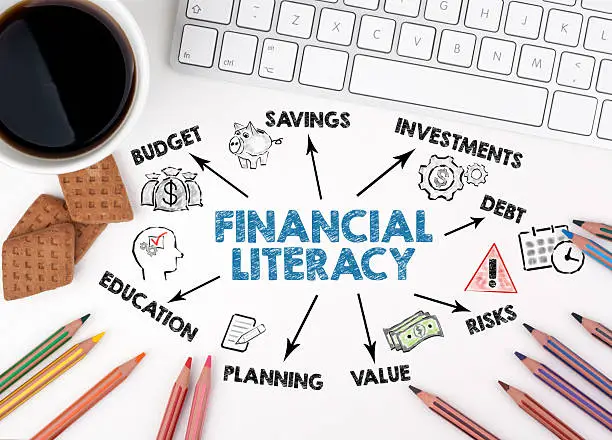
What is Financial Literacy Anyway? Financial literacy isn’t just about being able to save money. It’s having the knowledge of financial concepts to make smart financial decisions. There are 4 main stops we will be taking along our journey: budgeting, savings, credit, and investing. These principles allow you to confidently navigate the financial world and make sound financial decisions. Financial literacy enables you to manage your personal finances in a way that is both effective and efficient.
Step 1: Budget A budget is a way for individuals to track their income and prepare for monthly expenses. Without a budget, individuals may not have enough funds to cover some of their monthly expenses. Budgeting helps you track monthly expenses and how much of your pay needs to be set aside to cover all your necessities. One of the most common ways to budget is the old-fashioned paper-and-pencil method, or you can use online budgeting tools.
Step 2: Saving Having a savings account or a savings plan will help cover any unexpected costs or emergencies that can happen throughout the year. Learning how to save money is crucial as it helps build security and financial independence, all of which stem from having healthy financial habits.
Step 3: Credit Building credit is a financial pillar that individuals need to work on in order to improve. Credit is like your financial reputation; if your credit is bad, then your repayment credibility may not be good, but the better the credit score the more credibility you have with lenders.
Step 4: Investing Investing is the final stop that we are making on our journey to become financially literate. Investing is important because it provides opportunities to build long-term wealth and outpace inflation. The earlier that you start investing, the more your money will grow, offering you financial security as you enter your golden years.
Financial literacy isn’t just a class issue; it’s a human condition. Money is part of life, like oxygen. Melody Hobson
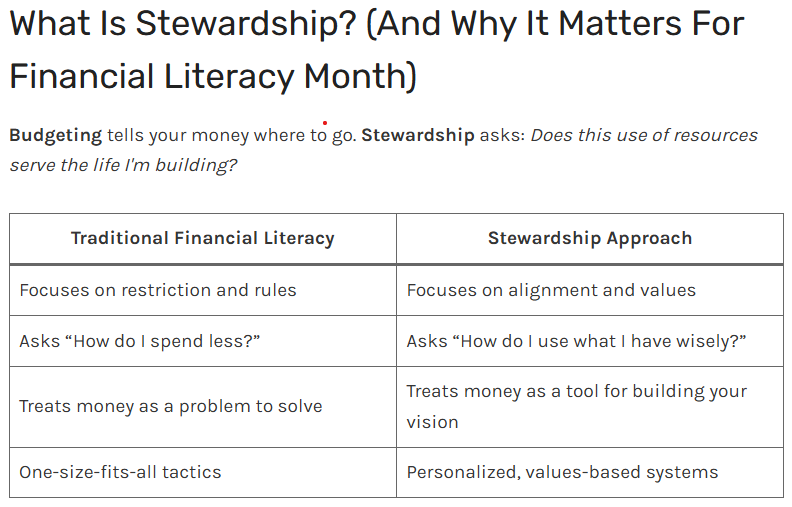
Reflections: Stewardship Principles for Financial Literacy Month. By Tiffany Grant, MBA, AFC, SHRM-CP
What does financial peace look like for you?
What are you managing money for?
What would “enough” feel like?
Prayer: Dear God, I pray for prosperity and abundance in my life. Open doors of opportunity and create pathways for financial growth. Grant me wisdom to manage my resources effectively and to invest wisely. Help me to achieve financial freedom and stability. Amen

 hope14me.org