

But when he was strong, his heart was lifted up to his destruction: for he transgressed against the Lord his God, and went into the temple of the Lord to burn incense upon the altar of incense. 2Chronicles 26:16
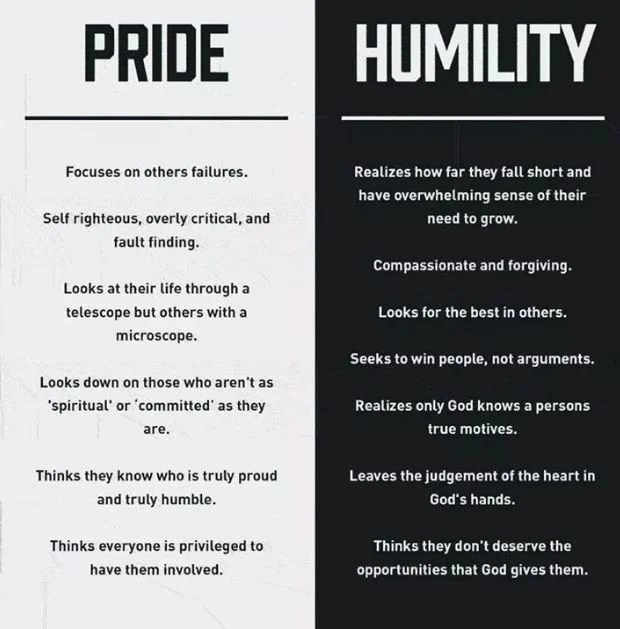
There are also many biblical examples of pride and its consequences in the lives of individuals, and they offer valuable lessons for our own lives. Often their stories are self-contained in one chapter and make for easy reading. One of the more notable examples from the Old Testament is that of Uzziah, who was a believer. When he became king of Judah at age sixteen, he set his heart to seek God and put himself under the spiritual mentorship of Zechariah. And “as long as he sought the Lord, God made him to prosper” (2 Chron. 26:5). As a result, he acquired wealth and also became politically and militarily powerful. Then things changed. “His fame spread far, for he was marvelously helped, till he was strong. But when he was strong, he grew proud, to his destruction” (26:15–16).
What happened? There are hints in the text that at some point on the road to the top, he stopped seeking the Lord and the spiritual mentoring of Zechariah. This suggests a lessening dependence on God and a growing reliance upon himself and his own strength and wisdom. History shows at every point how easy it is for pride to increase as we become stronger, more successful, more prosperous, and more recognized in our endeavors. In fact, anything, real or imagined, that elevates us above others can be a platform for pride. Ironically, this is true even when these things come as a result of God’s blessings.
In fact, anything, real or imagined, that elevates us above others can be a platform for pride. Ironically, this is true even when these things come as a result of God’s blessings.-The Great Divorce: C.S. Lewis
As a result of all his blessings, Uzziah, rather than humbling himself in thanksgiving to God, began to think more highly of himself than he should have and developed an exaggerated sense of his surroundings own importance and abilities. This pride of heart led to presumption before God and brought very serious consequences upon him, illustrating the biblical warnings that pride leads to disgrace (Prov. 11:2) and that “pride goes before destruction” (Prov. 16:18). I encourage you to read and meditate on Uzziah’s full story in 2 Chronicles 26. The stories of Haman (Esther 3–7) and Nebuchadnezzar (Daniel 4) also offer valuable insights into pride and are well worth reading.
“It is Pride which has been the chief cause of misery in every nation and every family since the world began.”
c.s. lEWIS
Reflections:Uzziah began his reign at sixteen, sought the LORD, and was marvelously helped. Military victories, technological advances, and widespread fame followed (2 Chronicles 26:3–15). Success, however, exposed a hidden flaw.
1.Blessings can become traps when we forget their Source. Then your heart will become proud, and you will forget the LORD your God” (Deuteronomy 8:14).
2. Pride always precedes a fall.“Pride goes before destruction, and a haughty spirit before a fall” (Proverbs 16:18).
3. God’s holiness sets boundaries we must not ignore. Nadab and Abihu learned this the hard way (Leviticus 10:1-2).
4. Accountability is a gift; spurning it is perilous. Uzziah silenced the priests instead of heeding them.
5. Visible success never overrides unseen character. God “opposes the proud but gives grace to the humble” (James 4:6; 1 Peter 5:5-6).
6. Consequences can be lifelong, yet God’s mercy remains (26:21).
Prayer:I repent for my self-reliance. I realize that I cannot walk through life without Your help. I ask for Your beautiful gift of humility to penetrate my heart. I lay down my pride and selfishness, and by Your grace, clothe myself in humility that comes from You. I want to reflect selflessness to the world, but for me to do that, I know that I need to walk in humility and put my trust in You alone.
May You be glorified in all that I say and do. In Jesus’ name, amen.
 hope14me.org